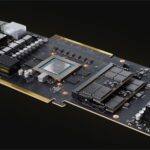


The Dawn of Blackwell: NVIDIA’s RTX 50-Series Arrives
The gaming world held its breath, and then, at CES 2025, NVIDIA CEO Jensen Huang delivered: the GeForce RTX 50-series, powered by the revolutionary Blackwell architecture, is here. Promising an unprecedented leap in AI-accelerated graphics and raw gaming performance, these new GPUs are poised to redefine what’s possible on PC. From the flagship RTX 5090 to the accessible RTX 5070, NVIDIA’s latest lineup aims to bring film-quality realism and staggering frame rates to the masses, all while integrating AI directly into the silicon. But what exactly makes Blackwell so special, and how much of NVIDIA’s bold claims hold up to scrutiny? Join us as we dive deep into the architecture, the cards, and the future of gaming graphics.

Beyond Ada: Deconstructing the Blackwell Architecture
Blackwell isn’t just a generational refresh; it’s a fundamental shift, purpose-built for the age of accelerated computing and generative AI. Named after pioneering mathematician David Harold Blackwell, this architecture succeeds Hopper and integrates AI directly into its core, influencing everything from rendering to performance optimization. Key advancements include beefier Streaming Multiprocessors (SMs) with increased throughput, tighter Tensor core integration, enhanced shader execution reordering, and acceleration for FP4 compute. The new RT Cores double the ray-triangle intersection rate, while improved hardware flip metering for Multi Frame Generation and better compression collectively boost overall, RT, and AI performance. This isn’t just about faster frames; it’s about smarter frames.


Blackwell’s AI Edge: DLSS 4 and Multi Frame Generation
The cornerstone of Blackwell’s gaming prowess is DLSS 4 with Multi Frame Generation. This AI-powered technology can generate up to three additional frames for every traditionally rendered frame, promising up to an 8x performance boost and setting the RTX 50-series apart from its predecessors. It’s not just upscaling; it’s creating.
Meet the Powerhouses: RTX 5090, 5080, 5070 Ti, and 5070
NVIDIA’s initial desktop lineup for the RTX 50-series includes four formidable ‘Blackwell’ cards, each targeting a different segment of the high-end market. The flagship RTX 5090 and RTX 5080 lead the charge with a January 30, 2026 release, followed swiftly by the RTX 5070 Ti and RTX 5070 in February. All models feature the new GDDR7 memory and are built to harness the full potential of DLSS 4. Here’s a detailed look at what each card brings to the table:
NVIDIA GeForce RTX 50-Series Desktop Specifications
| Category | RTX 5090 | RTX 5080 | RTX 5070 Ti | RTX 5070 |
|---|---|---|---|---|
| GPU Model | GB202 | GB203 | GB203 (Cut-down) | GB205 |
| Transistors | 92 Billion | N/A | N/A | N/A |
| CUDA Cores | 21,760 | 10,752 | 8,960 | 6,144 |
| VRAM | 32 GB GDDR7 | 16 GB GDDR7 | 16 GB GDDR7 | 12 GB GDDR7 |
| Memory Bus | 512-bit | 256-bit | 256-bit | 192-bit |
| Boost Clock | 2.41 GHz | 2.62 GHz | 2.45 GHz | 2.51 GHz |
| TGP | 575W | 360W | 300W | 250W |
| Recommended PSU | 1000W | 850W | 750W | 650W |
| Launch Price | $1,999 | $999 | $749 | $549 |


RTX 50-Series vs. RTX 40-Series: Generational Leap
| Feature/Card | RTX 5090 (vs. 4090) | RTX 5080 (vs. 4080 Super) |
|---|---|---|
| CUDA Cores | 21,760 (up from 16,384) | 10,752 (up from 10,240) |
| VRAM | 32GB GDDR7 (up from 24GB GDDR6X) | 16GB GDDR7 (same capacity, faster tech) |
| Memory Bus | 512-bit (up from 384-bit) | 256-bit (same) |
| TGP | 575W (up from 450W) | 360W (up from 320W) |
| DLSS | DLSS 4 with MFG | DLSS 4 with MFG |
| Performance Claim | Up to 2x RTX 4090 | Up to 2x RTX 4080 |
The Path Tracing Revolution: DOOM: The Dark Ages Showcase
While the RTX 50-series brings raw power, its true potential shines brightest with advanced rendering techniques. DOOM: The Dark Ages, running on the cutting-edge idTech8 engine, has received a PC-exclusive update introducing full path tracing. This isn’t just a visual upgrade; it’s a fundamental reimagining of light. Initially launched with native ray-traced global illumination and reflections, the new path tracing significantly elevates image quality by simulating light’s behavior more accurately, allowing it to bounce multiple times and illuminate scenes with unprecedented realism. Powered by NVIDIA Spatial Hash Radiance Cache (SHaRC) technology, this means more detailed and dynamic lighting, from the subtle glow of a torch to the hellish skies reflecting off the DOOM Slayer’s armor.

Unlocking Unreal Performance: DLSS 4 and Multi Frame Generation
To handle the immense demands of path tracing and other graphically intensive workloads, NVIDIA relies on its suite of AI-powered technologies, spearheaded by DLSS 4. This new iteration utilizes a transformer AI model, not only enhancing image quality but also introducing Multi Frame Generation (MFG) which can generate up to three additional frames per traditionally rendered frame. Alongside DLSS Super Resolution and the new DLSS Ray Reconstruction (an AI model replacing traditional ray tracing denoisers), these technologies collectively provide significant performance multipliers. NVIDIA Reflex further minimizes input latency, ensuring that these boosted frame rates still feel responsive.
DOOM: The Dark Ages Path Tracing Performance with DLSS 4 (FPS Multiplier)
DLSS 4 with Multi Frame Generation: The Ups and Downs
Pros
- Massive frame rate increases (up to 8x claimed, 6.8x observed in DOOM at 4K)
- Significantly improved image quality over previous DLSS versions (sharper text, realistic shadows, fewer artifacts)
- Enables playable frame rates in demanding path-traced titles at high resolutions
- Override functionality in NVIDIA app extends MFG to unsupported games
Cons
- Noticeable input delay, especially in slower-paced games (mitigated by Reflex)
- Potential for image quality degradation with more generated frames, particularly at lower base frame rates
- Generated frames don’t feel identical to native frames for all users
- Requires developer integration for optimal results, though override exists
Blackwell on the Move: The Mobile RTX 50-Series
NVIDIA hasn’t forgotten laptop gamers. The mobile RTX 50-series, launching from March, brings Blackwell’s power to portable form factors. While the mobile RTX 5090 notably uses the GB203 GPU (the same as the desktop RTX 5080), it boasts an unprecedented 24GB of VRAM – the most ever in a laptop, addressing the increasing memory demands of modern games. New NVIDIA Max-Q technology further enhances efficiency, promising up to an extra hour of battery life during gaming and enabling thinner, lighter designs without sacrificing performance.

Early tests with the mobile RTX 5090 on a Razer Blade 16 showed that while raw graphics performance offered a modest increase over the previous mobile RTX 4090, the real magic happens with DLSS 4. In Cyberpunk 2077’s demanding Ray Tracing Overdrive mode, 2X multi-frame generation boosted average FPS to 82, jumping to 115 FPS in 3X mode at 2560×1600. Similarly, Indiana Jones and The Great Circle saw frame rates transform from the 40s to a ‘buttery’ 60 FPS with 3X or 4X generation. This underscores that for mobile gaming, DLSS 4 is not just an enhancement, but often a necessity to achieve a premium experience.
The Fandom Weighs In: Value, Performance, and Early Concerns
The launch of a new GPU generation always sparks intense debate within the PC gaming community, and the RTX 50-series is no exception. Fandom discussions reveal a strong current of ‘Consideration/Deliberation’ and ‘Skepticism/Value-seeking.’ Gamers are meticulously weighing the perceived value and performance gains against the significant price points, often debating the merits of prebuilt systems versus custom builds. While the promise of double the performance is enticing, the community remains pragmatic.
If you’re going to play the two games that come free, I would heavily consider the bundle.
Initial price concerns, while present, were somewhat mitigated by the RTX 5090 launching at $1,999, aligning with previous flagship pricing, though notable market anomalies like a $7,000 gold-plated Asus RTX 5090 and in-box replacements with backpacks have added a touch of surrealism to the launch. Furthermore, early compatibility issues, such as Varjo Aero VR headsets not functioning correctly, remind us that bleeding-edge tech often comes with initial teething problems. The community’s practical interest in game bundles, like the rumored Borderlands 4 inclusion (or generic ‘two games free’), acts as a conditional incentive, but ultimate value remains tied to performance and stability.
RTX 50-Series Availability & Pricing
Release Dates:
- RTX 5090 & 5080 (Desktop): January 30, 2026
- RTX 5070 Ti & 5070 (Desktop): February 2025
- RTX 5090, 5080, 5070 Ti (Laptop): March 2025
- RTX 5070 (Laptop): April 2025
Pricing:
- RTX 5090: $1,999
- RTX 5080: $999
- RTX 5070 Ti: $749
- RTX 5070: $549
Where to Buy: NVIDIA.com, select global retailers, and major laptop manufacturers (Acer, ASUS, Dell, MSI, Razer, etc.)
The Blackwell Era: A Glimpse into Gaming’s AI-Powered Future
The NVIDIA RTX 50-series, powered by the Blackwell architecture, represents a significant leap forward in gaming technology. While raw performance gains are solid, the true revolution lies in its deep integration of AI, particularly through DLSS 4 and Multi Frame Generation. This technology not only pushes frame rates to unprecedented levels but also enables stunning visual fidelity, as demonstrated by the path-traced marvel of DOOM: The Dark Ages. For enthusiasts and professionals seeking the absolute pinnacle of gaming performance and future-proof technology, the RTX 50-series, especially the RTX 5090, offers a compelling, albeit premium, upgrade. For others, the value proposition will heavily depend on their interest in AI-accelerated titles and the specific game bundles. Blackwell isn’t just faster; it’s smarter, and it’s here to stay.
Frequently Asked Questions About the NVIDIA RTX 50-Series
What is the NVIDIA Blackwell architecture?
Blackwell is NVIDIA’s next-generation GPU architecture, succeeding Hopper and Ada Lovelace. It’s purpose-built for accelerated computing and generative AI, integrating AI directly into its core to enhance rendering, performance, and power efficiency for both gaming and professional applications. It features advanced Tensor Cores, RT Cores, and new technologies like DLSS 4 with Multi Frame Generation.
How much faster is the RTX 5090 compared to the RTX 4090?
NVIDIA claims the RTX 5090 can deliver up to double the performance of the RTX 4090 in compatible applications, particularly when leveraging DLSS 4 and Multi Frame Generation. In demanding path-traced titles like DOOM: The Dark Ages, performance multipliers of up to 6.8x have been observed at 4K with DLSS 4 enabled.
What is DLSS 4 and Multi Frame Generation?
DLSS 4 is the latest iteration of NVIDIA’s Deep Learning Super Sampling technology, utilizing a transformer AI model for improved image quality. Multi Frame Generation (MFG) is a key feature of DLSS 4 that generates up to three additional frames for every traditionally rendered frame, significantly boosting frame rates. It’s an AI-driven approach to increase performance beyond what raw GPU power alone can achieve.
When are the NVIDIA RTX 50-series GPUs available?
The flagship desktop RTX 5090 and RTX 5080 were released on January 30, 2025. The RTX 5070 Ti and RTX 5070 desktop cards followed in February 2025. Mobile RTX 50-series GPUs began rolling out in March 2025, with the RTX 5070 laptops arriving in April 2025.
Is the RTX 50-series worth upgrading for?
For gamers and creators seeking the absolute best performance, especially in AI-accelerated and path-traced titles, the RTX 50-series offers a compelling upgrade, particularly if moving from an older generation. The value proposition is strongest for those who will fully utilize DLSS 4 and its Multi Frame Generation capabilities. For users with recent RTX 40-series cards, the decision will depend on specific performance needs and budget, as the generational leap is most pronounced with the new AI features enabled.
Sources
- Content Profile (JoltGamer Internal Data)
- Initial Topic Analysis (JoltGamer Internal Data)
- Thematic Story Summary (Curated Intelligence Briefs)
- Fandom Pulse (Emotional Analysis Report)
- TechPowerUp (RTX 5090 specifications)
- CES 2025 Keynote Announcements (NVIDIA)
- NVIDIA GeForce Blog (Blackwell, DLSS 4, DOOM: The Dark Ages updates)
- Icecat (ASUS ROG Astral -RTX5090-32G-GAMING product data)
- PC.faqs.tw (Historical game bundle reference - Witcher 3)
- Reddit/Community Forums (Fandom Pulse quotes and discussions)